.png)
EN
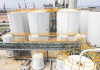
Wilmar (Zhoukou) 80TPD Lard/Tallow Rendering Project: Engineering Practice in Energy Saving and Environmental Protection
Jun 29, 2026
In animal fat processing, lard and tallow rendering face multiple challenges including dark color, strong odor, high energy consumption, and wastewater and exhaust gas emissions. Ocean's 80-ton-per-day lard/tallow rendering project for Wilmar (Zhoukou) successfully addressed these issues.
Ocean's animal fat rendering technology was fully validated in this project. The production line can flexibly process various animal fat feedstocks including lard, tallow, and more.
Project Challenges
The raw lard/tallow exhibited significant color and odor issues, requiring effective decolorization and deodorization processes to meet market standards. The rendering process was energy-intensive, involving substantial heat and electricity consumption, while also generating wastewater and exhaust gas emissions that needed proper treatment to minimize environmental impact.
Ocean's Solutions
The production line starts with raw material handling — after unpacking, conveying, crushing, and online metal detection, the material enters a pre-melting pot and then an energy-saving melting furnace. The core innovation lies in using secondary steam to heat the energy-saving melting furnace, achieving heat recovery. All temperature, pressure, and flow parameters are under fully automatic control.
The process employs dry vacuum energy-saving refining technology, which can be heated by steam or thermal oil, eliminating the need for a boiler. The entire rendering line operates in a fully sealed environment from material feed to oil discharge, with centralized odor treatment to effectively reduce product contamination. Continuous vacuum dry rendering significantly reduces wastewater discharge.
The vacuum system has become compact due to energy recovery, requiring only one water ring pump, which reduces electricity consumption. High-temperature equipment is equipped with an overall insulation jacket to prevent burn accidents during operation and reduce heat loss. Pipes and interfaces are easy to disassemble, and the equipment has a polished surface for easy cleaning and maintenance. All material-contact parts (equipment and pipes) are made of 304 stainless steel, allowing for CIP cleaning after the rendering process with no residue left behind.
Project Results
The project achieved significant results: steam consumption reduced by 50%, electricity consumption reduced, labor costs reduced, production efficiency increased, and wastewater discharge reduced.
Ocean provides full-chain services from process design and equipment manufacturing to installation and commissioning, delivering efficient, energy-saving, and environmentally friendly animal fat rendering lines.
Recent Posts


Contact US
Product Information
Quantity
Unit
Piece
Support order samples, customization, wholesale direct, and complete payment. If the product you look for does not have corresponding customized content, pls fill out the form below to contact us, and we will reply ASAP.