Food Emulsifier Production Solutions

Food emulsifiers are essential ingredients in modern food processing, creating stable, uniform mixtures of oil and water. With numerous types available (such as mono/diglycerides, sucrose esters, Spans, and Tweens), production processes vary significantly based on chemical structure.
Ocean specializes in providing industrial-scale production solutions for food-grade emulsifiers, with a core focus on the most widely used type: glycerol monostearate (mono/diglycerides). Our primary process is the efficient and cost-effective glycerolysis (transesterification) method, suitable for large-scale, continuous output of high-quality products.

Key Process of Mono/Diglycerides Production via Glycerolysis


1.Raw Material Pre-treatment Section

Fats/oils (e.g., hydrogenated palm oil) are refined if necessary, then precisely metered and mixed with excess glycerol and a catalyst (e.g., sodium methoxide) in a pre-mixer. The mixture is dehydrated under vacuum and heat to eliminate moisture, which is critical for catalyst activity and to prevent saponification side reactions

2.Transesterification Reaction Section

The dehydrated mixture is pumped into a high-shear, jacketed reaction vessel. Under an inert atmosphere (nitrogen), high temperature (180-220°C), and high vacuum (<5 kPa), the catalyst promotes the exchange of fatty acid groups between the triglycerides (fat) and free glycerol. This reaction yields a mixture of mono-, di-, and residual triglycerides. The vacuum continuously removes reaction water, driving the equilibrium toward higher monoester yield (typically 40-55% in the crude mix).

3.Catalyst Neutralization & Bleaching Section

Upon reaction completion, the mixture is cooled. A weak acid (e.g., phosphoric or citric acid) is added to neutralize the alkaline catalyst. Activated clay or carbon is then introduced to adsorb color bodies, impurities, and neutralization salts. The mixture is finally filtered through a plate & frame or leaf filter to obtain a clear mono/diglyceride mixture.

4.Molecular Distillation Section (Purification)

This step is crucial for producing high-purity, distilled monoglycerides (purity >90%, up to 95%+). The filtered mixture enters a short-path molecular distillation system (typically 2-stage). Under an extremely high vacuum (<1 Pa) and controlled temperature, monoesters—having the highest vapor pressure—are volatilized first, separated from di/tri-glycerides, and then condensed. The result is a premium, light-colored, odor-free monoglyceride product.

5.Product Forming & Packaging Section

The molten distilled monoglyceride can be packed directly in heated containers or, more commonly, solidified. It is passed over a flaking belt cooler or through a pastillation tower to form uniform flakes or pellets. These can be blended with other food-grade carriers (like starch) to create custom emulsifier blends before final automated packaging in moisture-resistant bags or drums.

Key Advantages


High Purity & Consistent Quality

The core molecular distillation step ensures monoglyceride content exceeds 90%, guaranteeing superior and consistent emulsifying performance, light color, and neutral taste for demanding food applications.

Energy-Efficient & Optimized Reaction

The glycerolysis process, using directly available fats/oils, is cost-effective. Integrated heat recovery from reaction, distillation, and cooling stages minimizes overall energy consumption.

Full Process Automation & Control

A centralized PLC/DCS system manages all critical parameters—temperature, vacuum, pressure, and feed ratios—ensuring batch-to-batch consistency, operational safety, and reduced labor dependency.

Scalable & Flexible Design

Our production lines are designed for continuous or large-batch operation and can be adapted to produce a range of mono/diglyceride types based on different fatty acid sources (e.g., from palm, soybean, or animal fats).

Raw Materials

Our emulsifier production lines are designed to process a variety of fat and oil sources efficiently. Key feedstocks include: Hydrogenated Vegetable Oils (Palm, Soybean), Animal Fats (Edible Tallow), Fatty Acids (Stearic Acid, Oleic Acid), Glycerol (Food Grade), etc.

Main Equipment

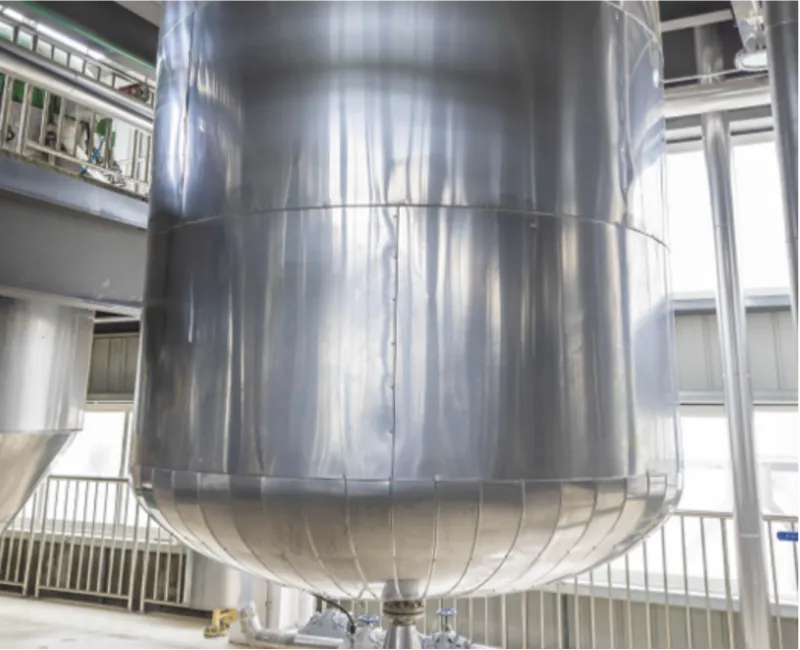
Transesterification Reactor

The core reaction vessel is a high-shear, jacketed stainless-steel (316L) reactor equipped with a powerful agitator, heating/cooling systems, a high-efficiency condenser, and a robust vacuum system. It is designed for precise temperature and pressure control to ensure optimal reaction kinetics and yield.
Short-Path Molecular Distillation System

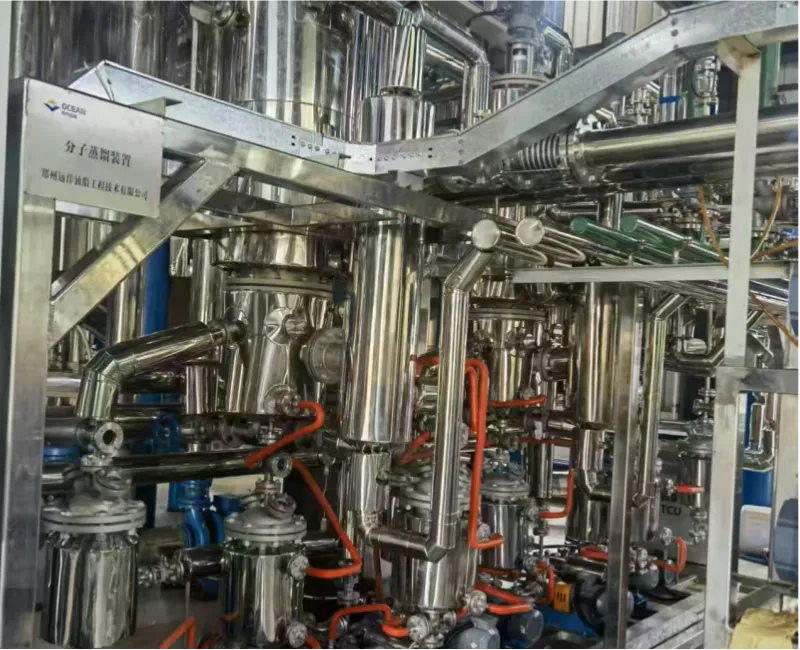
This is the quality-defining equipment. It operates under an ultra-high vacuum (maintained by a diffusion pump or roots/mechanical pump combination) to separate heat-sensitive monoglycerides gently. Its short residence time and low operating temperature prevent thermal degradation, preserving product quality, color, and functionality

Plate & Frame Filter Press

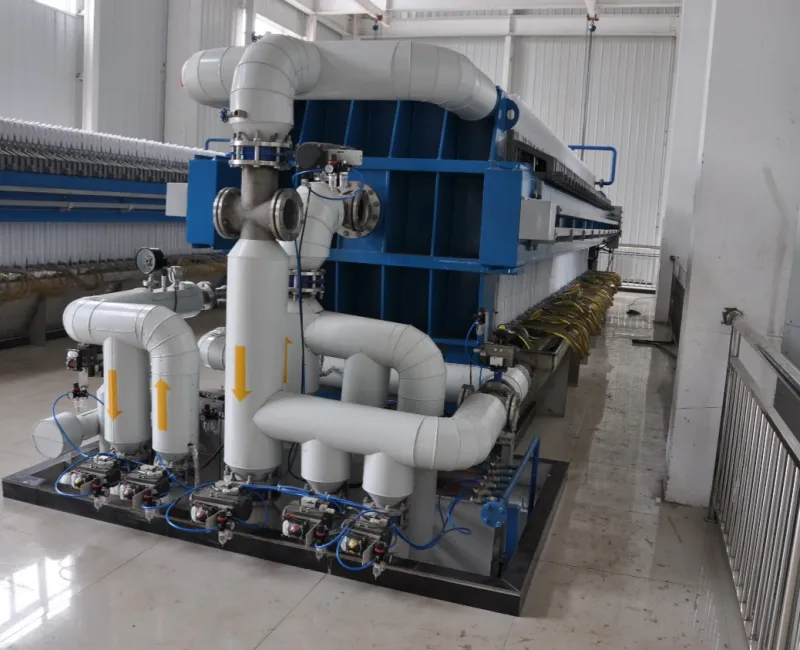
This robust filtration unit is critical for post-reaction purification. After catalyst neutralization and bleaching, the hot crude mixture is pumped into the filter press. Equipped with filter cloths and plates, it effectively removes all solid impurities, including spent bleaching earth (activated clay/carbon) and neutralization salts, to produce a perfectly clear mono/diglyceride mixture ready for distillation. Its design allows for efficient cake discharge and easy cleaning.

FAQ

  • Q.What is the difference between direct esterification and glycerolysis?

    • A: Direct esterification reacts pure fatty acids with glycerol and is best for high-purity, specific monoester production. Glycerolysis reacts whole fats/oils (triglycerides) with excess glycerol. It is more cost-effective for large-scale production of standard mono/diglyceride blends from readily available oils.

  • Q.What are the key quality control parameters?

    • A:The most critical are Monoglyceride Content (by GC, typically >90% for distilled grade), Acid Value (free fatty acids), Melting Point, Color, and food safety parameters like Heavy Metals.


  • Q.Why is molecular distillation necessary?

    • A: The initial transesterification reaction produces a mixture. Molecular distillation is the only commercially viable method to physically separate and concentrate the monoglycerides to purities above 90%, which is required for their high emulsifying efficiency in many food applications.


  • Q.Can you produce other emulsifiers like sucrose esters?

    • A:Yes. While our core expertise is in mono/diglycerides, the fundamental engineering principles extend to other emulsifiers. Production of sucrose esters, Spans (sorbitan esters), and Tweens (ethoxylated sorbitan esters) involves different reaction chemistries (e.g., solvent-based synthesis, ethoxylation) and requires specialized, safe equipment which we can also supply.